

How Much Should I Feed My Dog? A Practical Guide for Adult Dogs and Puppies
Feeding charts are only a starting point. Learn how to read the food label, how often to feed, and how to tell if your dog is at a healthy weight.
Ask five dog owners how much they feed and you will get five different answers. That is because the right amount depends on your dog's size, age, activity and the calorie density of the food. The good news is that a simple process gets you close.
Step 1: Start with the food label
Every bag or can lists a feeding guide by weight. Treat it as a starting point rather than a rule. Active dogs may need more, while couch-loving or neutered dogs often need less.
Step 2: Divide into meals
- Adult dogs: commonly fed twice a day, which is gentler on digestion than one large meal.
- Puppies: usually need three to four small meals daily while young, with the number dropping as they grow. Your vet can confirm the right schedule for your puppy's breed and age.
- Senior dogs: may need adjusted portions or a different formula, so ask your vet.
Step 3: Count the treats
Many veterinarians suggest keeping treats to about ten percent of daily calories. Training treats add up fast, so reduce meal portions slightly on heavy training days.
Step 4: Check body condition, not just the scale
- You should be able to feel your dog's ribs under a thin layer of fat, without them sticking out.
- From above, your dog should have a visible waist behind the ribs.
- From the side, the belly should tuck up toward the hind legs.
If you cannot feel the ribs or see a waist, your dog may need fewer calories. If ribs and hips are very prominent, they may need more. Ask your vet for a body condition score at the next checkup.
Pick a bowl that fits the portion
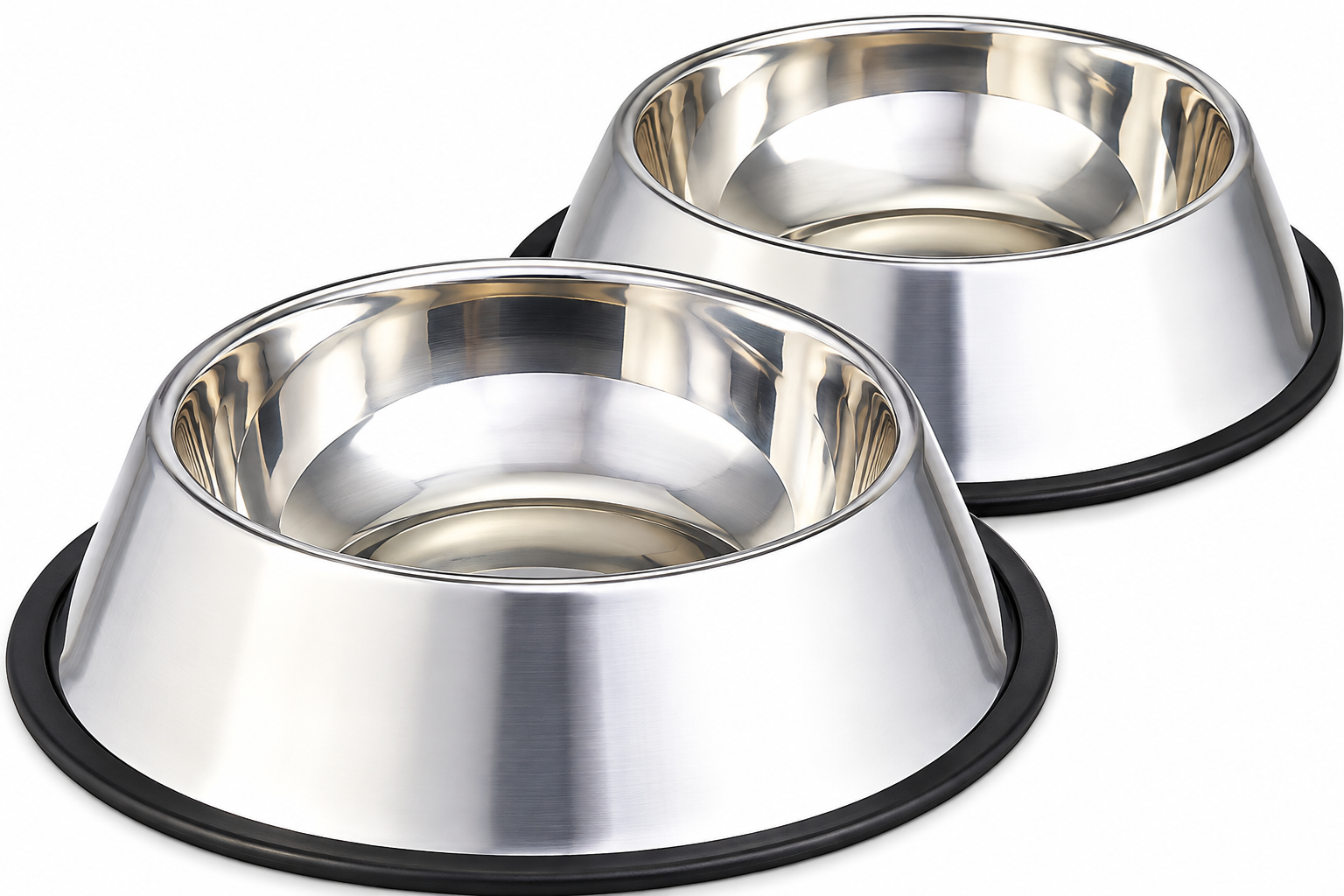
A bowl should hold a full meal without spilling, with space left to mix in wet food. Large dogs eating three to four cups of kibble, for example, do well in a wide bowl with room to spare, such as the Amazon Basics stainless steel bowl which holds 38 oz to the rim with a recommended fill of 28 oz. Use a measuring cup at every meal so portions stay consistent.
🐾 A Roomy Bowl for Big Appetites
Wide, shallow, non-skid and dishwasher safe. Ideal for medium and large dogs.
Always involve your vet
Dogs with health conditions, allergies or special diets should follow veterinary feeding instructions. Make food changes gradually over several days to avoid stomach upset.
Does your dog inhale meals in seconds? Read how to slow down a fast-eating dog.
Disclosure: PetNest is a participant in the Amazon Associates program. As an Amazon Associate we earn from qualifying purchases at no extra cost to you. Prices and availability can change, so always check the current listing. This article is general information and is not a substitute for advice from your veterinarian.