




Stainless Steel vs Plastic vs Ceramic Dog Bowls: Which Is Best?
Steel, plastic, ceramic or silicone? We compare the most common dog bowl materials on hygiene, durability, weight and price.
Walk into any pet store and you will see bowls in plastic, steel, ceramic and silicone. They all hold food, so does the material really matter? For hygiene, durability and safety, it does. Here is how the four main options compare.
| Material | Hygiene | Durability | Weight / stability | Typical cost |
|---|---|---|---|---|
| Stainless steel | Excellent: non-porous, dishwasher friendly | Very durable; can dent if dropped | Light unless it has a rubber ring or weighted base | Low to moderate |
| Ceramic | Very good if glazed and uncracked | Can chip or crack | Heavy and stable | Moderate |
| Plastic | Fair: scratches can trap residue | Can crack or be chewed | Very light, slides easily | Lowest |
| Silicone | Good, easy to wash | Flexible and chew-prone | Light but grippy; often travel bowls | Low to moderate |
Stainless steel: the all-rounder
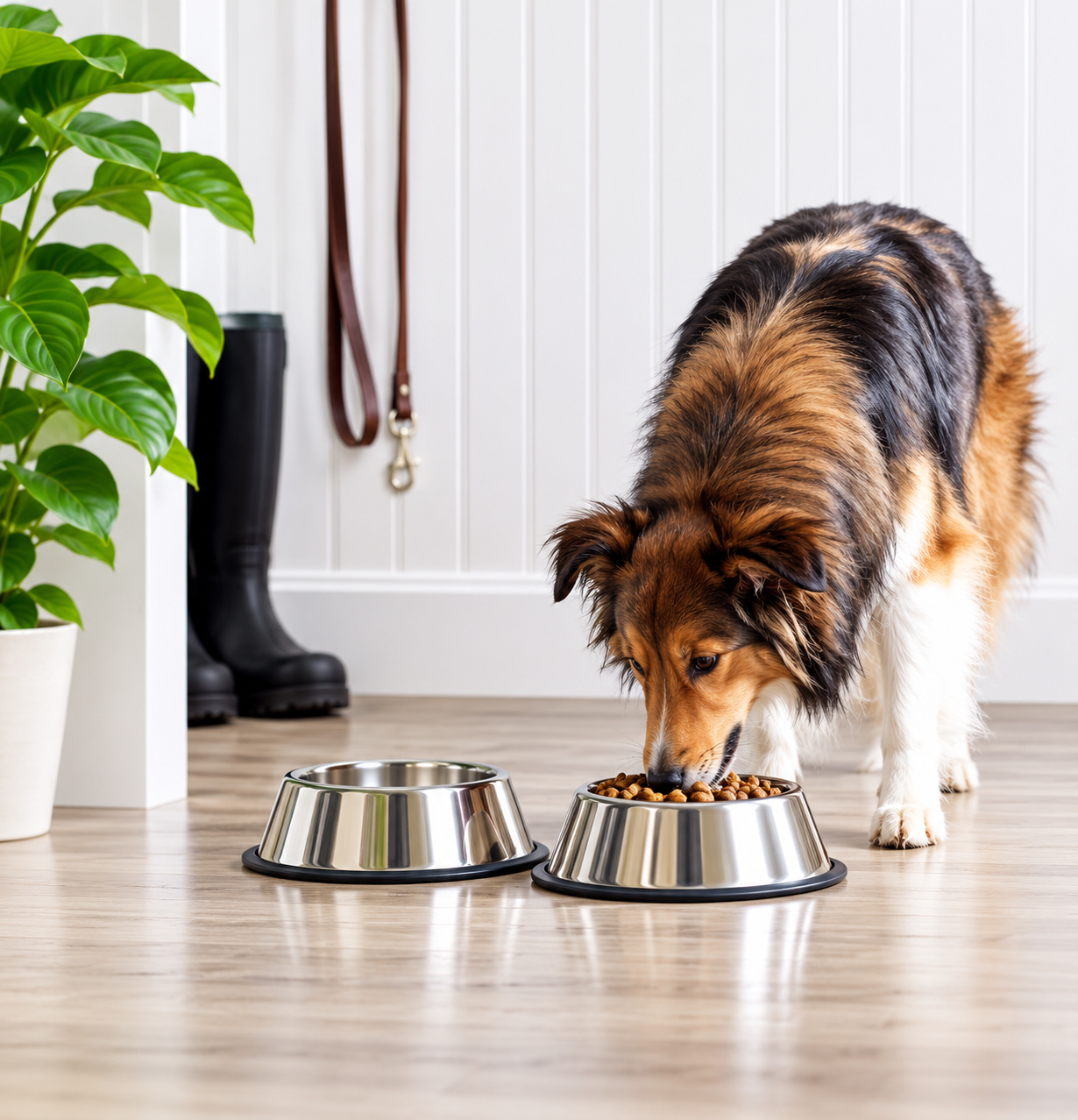
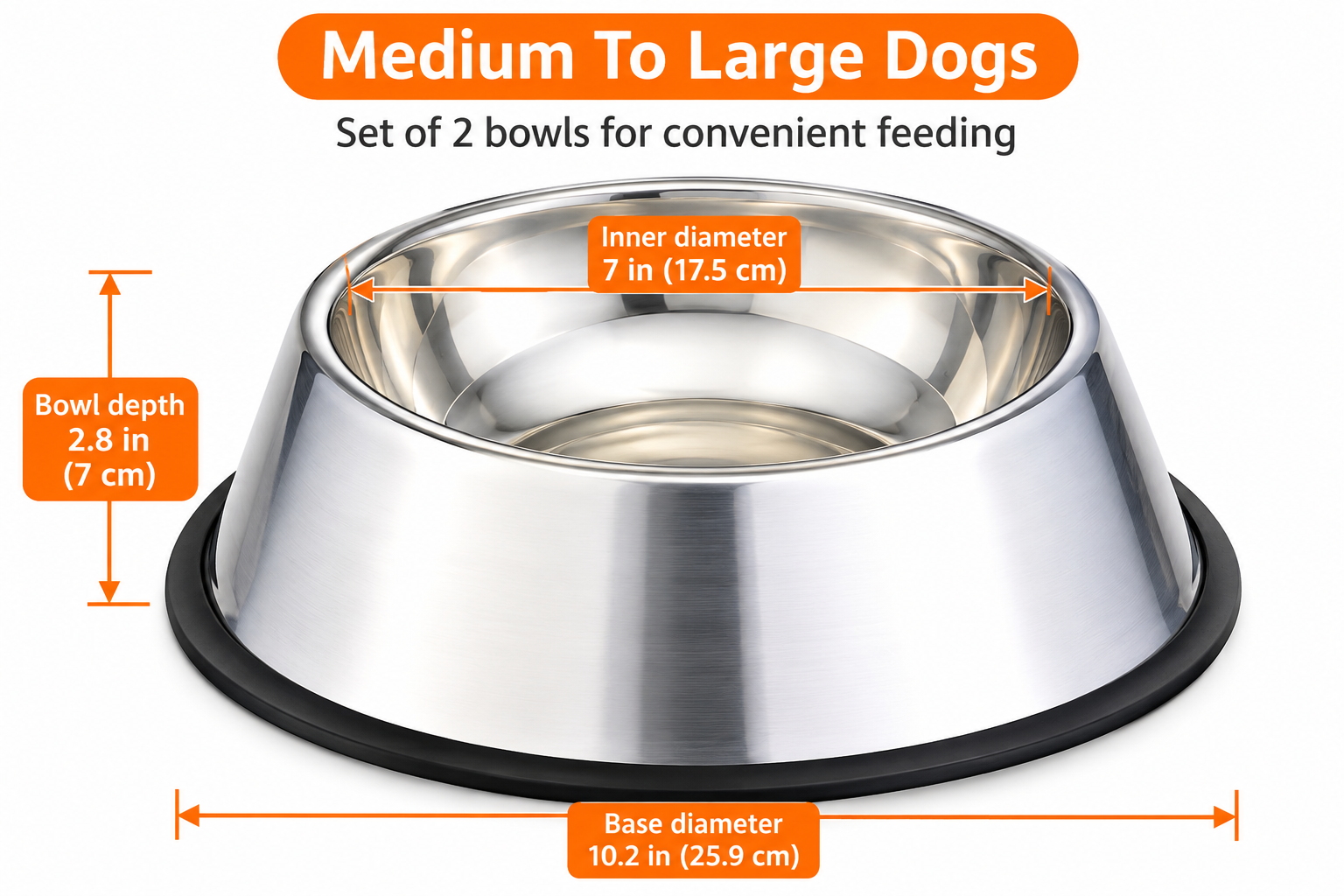
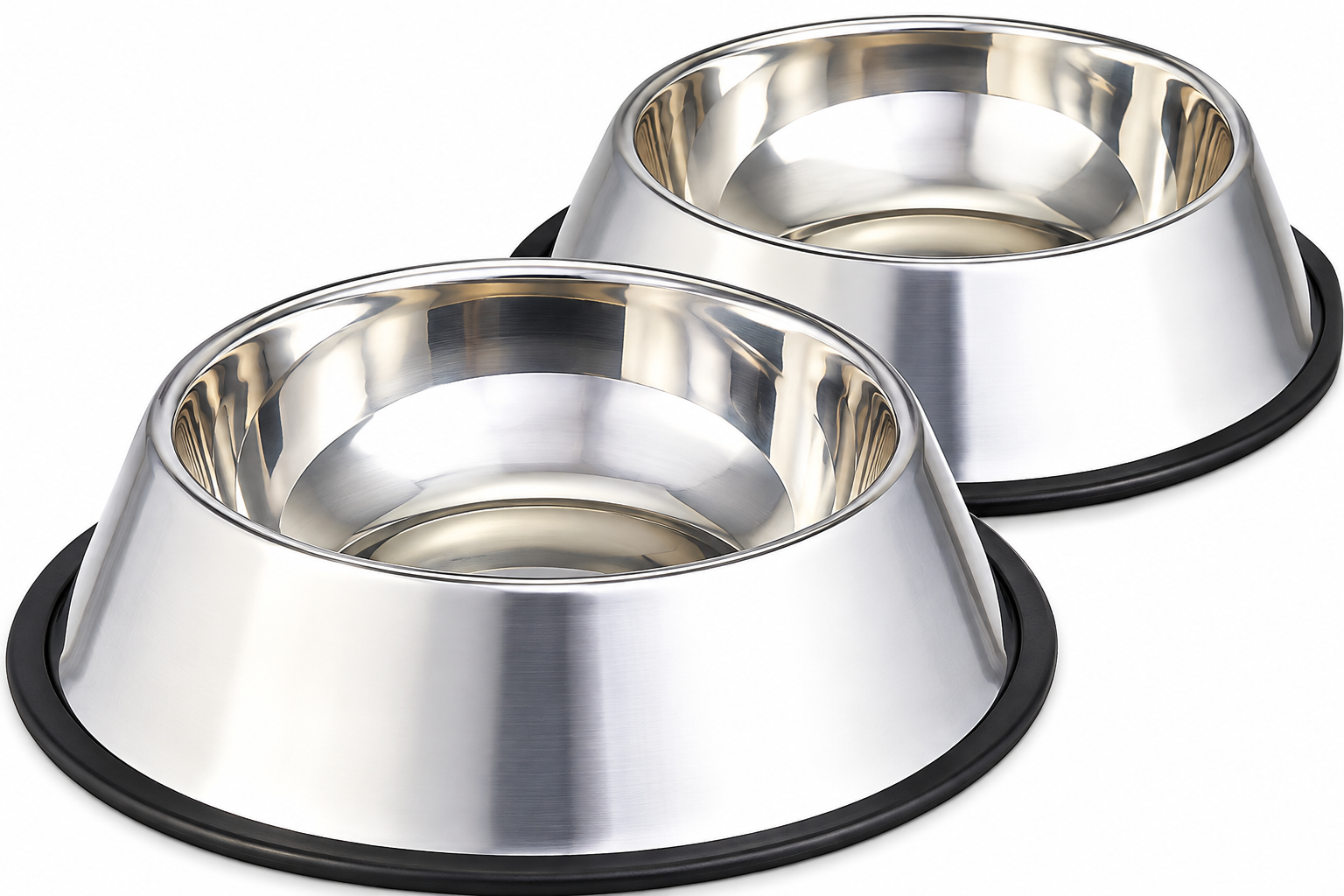
Steel is the favorite of many veterinary clinics and kennels for a reason. It does not absorb odors, tolerates hot water and dishwashers, and rarely breaks. Its only weakness is weight: a bare steel bowl can skate across the floor, which is why a rubber base ring matters so much. A design like the Amazon Basics non-skid stainless bowl fixes that with a wide base and rubber ring.
Ceramic: heavy and handsome
A glazed ceramic bowl is stable and looks good. The trade-offs are fragility and the need to check for chips and crazing, since damaged glaze can hold bacteria. It is also unforgiving if dropped on tile.
Plastic: cheap but not ideal
Plastic is inexpensive and light, but it scratches easily and those micro-scratches can hold residue. Some dogs also develop irritation around the chin or muzzle, which owners and vets sometimes link to plastic bowls. If your dog has chin spots, ask your vet and consider switching materials. Heavy chewers can also damage plastic.
Silicone: great for travel
Collapsible silicone bowls are fine for walks and trips. For everyday home feeding most owners prefer something sturdier.
Our recommendation
For daily use at home, stainless steel with a non-skid base is the best balance of hygiene, durability and price. Ceramic is a good second choice if you prefer a heavier bowl and inspect it regularly. Reserve plastic and silicone for travel or temporary use.
🐾 Easy Win: A Non-Skid Steel Bowl
Dishwasher safe, rust resistant and built for medium to large dogs.
Care tips that apply to every material
- Wash food bowls daily and water bowls at least once a day.
- Replace bowls that are cracked, pitted, rusty or deeply scratched.
- Keep bowls away from cleaning products and rinse thoroughly after washing.
Read our full guide on keeping your dog's water bowl clean.
Disclosure: PetNest is a participant in the Amazon Associates program. As an Amazon Associate we earn from qualifying purchases at no extra cost to you. Prices and availability can change, so always check the current listing. This article is general information and is not a substitute for advice from your veterinarian.